Staffing Under Taylor's Law: A Unifying Framework for Bridging Square-Root and Linear Safety Rules
Oct 11, 2025·


 ·
0 min read
·
0 min read
L. Jeff Hong
Weihuan Huang
Jiheng Zhang
Xiaowei Zhang
Abstract
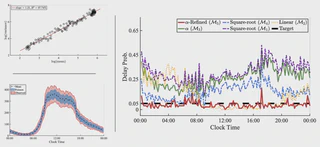
Staffing rules serve as an essential management tool in service industries to attain target service levels. Traditionally, the square-root safety rule, based on the Poisson arrival assumption, has been commonly used. However, empirical findings suggest that arrival processes often exhibit an `over-dispersion’ phenomenon, in which the variance of the arrival exceeds the mean. In this paper, we develop a new doubly stochastic Poisson process model to capture a significant dispersion scaling law, known as Taylor’s law, showing that the variance is a power function of the mean. We further examine how over-dispersion affects staffing, providing a closed-form staffing formula to ensure a desired service level. Interestingly, the additional staffing level beyond the nominal load is a power function of the nominal load, with the power exponent lying between 1/2 (the square-root safety rule) and 1 (the linear safety rule), depending on the degree of over-dispersion. Extensive numerical experiments with both simulated and real arrival data show that our proposed model and staffing rules significantly outperform various alternatives.
Type
Publication
Management Science, Minor Revision

Authors
Professor in Department of Industrial and Systems Engineering at the University of Minnesota.

Authors
Assistant Professot in Department of Financial Technology & Engineering, Nanjing University.

Authors
Head and Professor, Department of Industrial Engineering and Decision Analytics Professor, and Professor in Department of Mathematics, HKUST.

Authors
I am an Associate Professor at HKUST, jointly appointed in the Department of Industrial Engineering and Decision Analytics and the Department of Economics, and the Academic Director of the MSc in FinTech program. I serve as an Associate Editor for several leading journals in the field, including Management Science, Operations Research, Navel Research Logistics, and Queueing Systems.